
Premium processing offers a defined timeframe for USCIS to take action on an eligible petition. It does not guarantee approval within that timeframe. If USCIS fails to take the required action, however, the premium processing fee may be refunded while the case continues.
Our firm recently received refund notices in two Form I-129 cases. Both petitions were ultimately approved, but each took approximately seven months despite premium processing. During that period, our inquiries to the Premium Processing unit produced no specific explanation for the delay. We were told only that USCIS needed additional time to review the cases. Approximately one month after approval, USCIS issued the refund notices shown below.
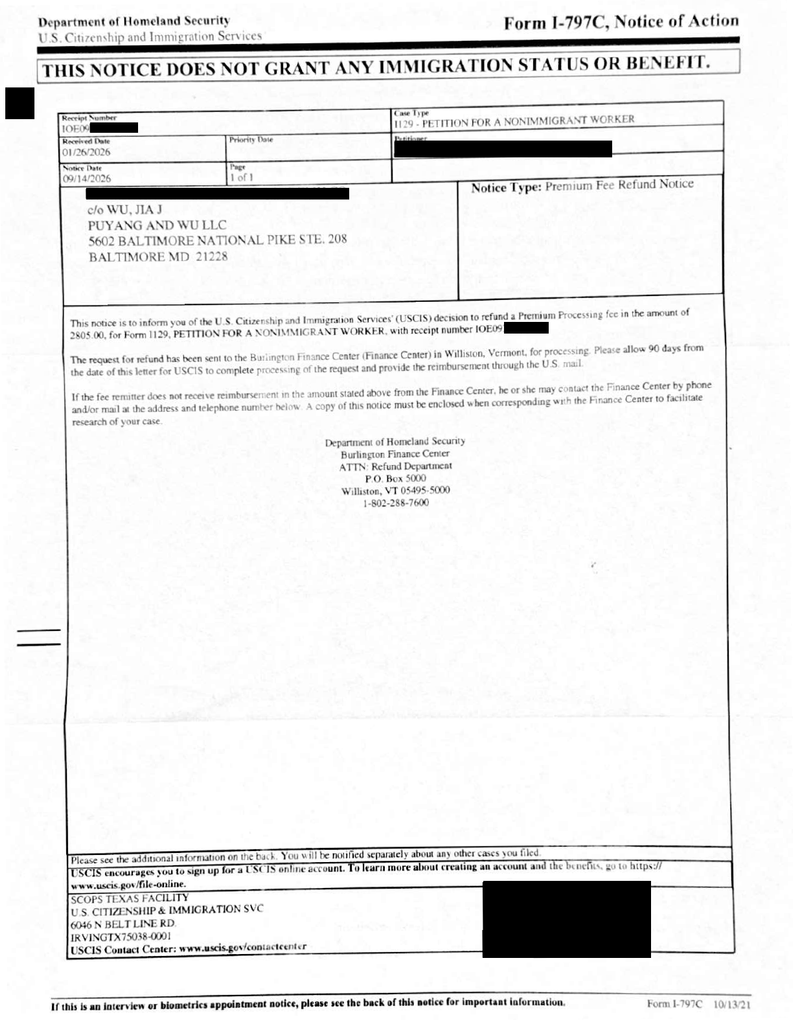
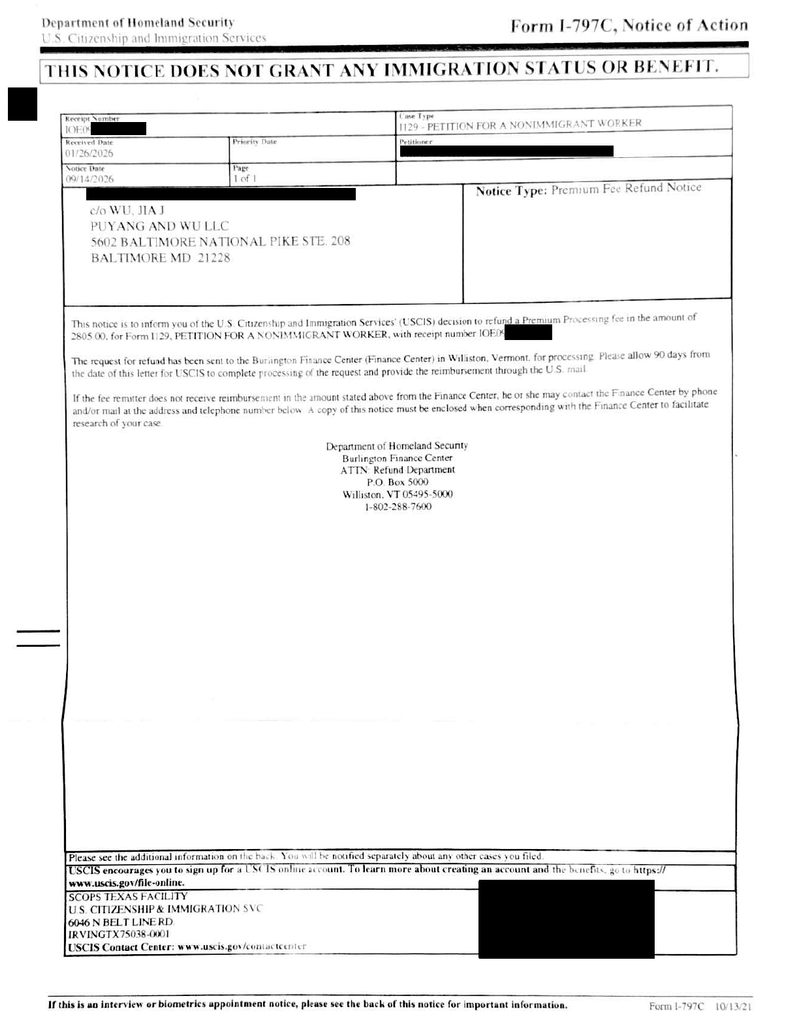
A long wait does not, by itself, establish that a refund is due. USCIS must take an applicable action within the premium processing timeframe, but that action can include issuing a request for evidence or a notice of intent to deny. Either notice stops the clock; a new timeframe begins when USCIS receives the response. USCIS also identifies an exception involving certain fraud or misrepresentation investigations.
The practical lesson is to track what action USCIS took and when, not just the final approval date. If the applicable timeframe passes without the required action, the person who paid for premium processing should check whether a fee refund is due. USCIS’s Form I-907 instructions explain the refund rule and its exceptions.